The Business of Fashion (Accessories)

How to start a fashion business? Now, that’s something we’ve wondered for years.

In our tradeMARKed series on Mark541 TV – we’re diving into how to make money with a fashion business. Below we start with the WHAT? What fashion category is easiest to join?

Top and best-selling fashion accessories in 2026 that are well-suited for private-label branding in the USA combine high consumer velocity (e-commerce, social commerce, and retail data), favorable margins, relatively accessible customization, and established U.S.-oriented private-label supply chains.

The broader fashion accessories market reached approximately $3.07 trillion in 2026 and is projected to grow to $3.85 trillion by 2031 (CAGR ~4.6%). Women remain the dominant end-user segment (~51% share), while kids’ lines grow faster. Online channels accelerate, social-media micro-trends shorten cycles, and demand favors multi-functional, sustainable, and personalized items. Watches show strong category growth, but volume and private-label accessibility are highest in jewelry, hair accessories, eyewear, and headwear.

Private-label suitability is strong for categories with moderate technical barriers, high branding potential (logo, packaging, colorways, exclusivity), and existing U.S. design/sourcing partners that handle overseas production with domestic quality oversight, logistics, and retail relationships. True Made-in-USA options exist but typically carry higher costs and lower volumes; most scalable private label blends U.S. design/merchandising with global manufacturing.

1. Fashion Jewelry (Highest Overall Volume and Private-Label Opportunity)

Best-selling items: Gold-plated or gold-tone stackable cuff bracelets and bangle sets, hoop earring sets, chunky cuffs, pendant/necklace styles (including floral, cross, and unconventional pearls), stud and statement earrings, and modern brooches.

Evidence of strength in 2026: Tracked e-commerce data shows individual gold bracelet sets and hoop sets reaching 10,000–20,000+ monthly units on major platforms. Luxury and accessible-luxury rankings frequently feature logo-embossed studs, coin earrings, and statement pieces. Trends emphasize chunky gold, maximalist/blinged brooches, tassels, and dainty-to-bold layering. Social commerce and Amazon-style rankings consistently place jewelry near the top of accessories volume.

Why it sells: Affordable self-expression, gifting strength, stackable/repeat-purchase behavior, and runway-to-street translation (maximalist and “quiet luxury” both perform). Price points commonly $10–$40 for fashion versions deliver strong perceived value.

Private-label potential in the USA: Excellent. Easy customization (plating, shapes, stones, packaging/carding). Low-to-moderate MOQs are common for catalog or light-custom programs; full custom is feasible. U.S. specialists such as Gennaro, Inc. (Rhode Island-based, multi-generational, women-owned; serves 30+ national retailers including department stores; full forecasting/design/merchandising/production for fashion jewelry, hair goods, and related accessories) provide turnkey private-label assortments with trend intelligence and proven sell-through. Other networks support packaging and branding. High margins and brand-building potential (your logo becomes the product story). Compliance considerations include metal content, nickel-free claims, and plating durability.

2. Hair Accessories (Explosive Online and Social Velocity)

Best-selling items: Sheer/jelly resin or polycarbonate claw and hair clips (pastel, clear, smoky “candy” colors), oversized ribbon/bow claw clips, pearl-embellished or silk scrunchies, no-damage elastics/hair ties, multi-piece sets, and headbands.

Evidence: Online retailer analyses and shipping data identify sheer jelly/resin clips as a top 2026 hair accessory, with sharp order growth (reported multi-hundred-percent increases in some periods). Amazon-tracked hair accessories and hair ties frequently show top ASINs exceeding 20,000–100,000+ monthly units for elastics and strong volumes for clips/sets. TikTok and U.S. social trends amplify acrylic/oval clips, glitter/Y2K mini claws, and personalized claw clips. Materials lean food-grade silicone/polycarbonate for soft, screen-safe, collectible appeal. Price points typically $8–$35; sets boost average order value.

Why it sells: Shift from pure utility to self-expression and “affordable luxury” collectibles. Multi-buy behavior (3–5 clips), seasonal color stories, and social virality drive volume. Near-universal usage makes the category habitual with trade-up potential.

Private-label potential: Very high. Low technical barriers, easy color/logo/packaging customization, and strong repeat/gift potential. U.S. private-label houses (including Gennaro and broader accessory specialists) already develop and supply hair goods for major retailers. MOQs can start relatively low for existing styles; custom molds or finishes scale with volume. Excellent for testing brand aesthetics quickly.

Nuances: Quality of hold, no-damage claims, and material feel matter. Themed sets and personalization (engraved or name clips) command premiums. Sustainability (recycled materials) is increasingly expected.

3. Sunglasses and Fashion Eyewear

Best-selling styles: Square-frame acetate, cat-eye, recycled acetate, wraparound/shield, and refined vintage-inspired shapes. Luxury and accessible rankings consistently feature these.

Evidence: Strong presence in 2026 accessory best-seller lists and fashion retail data. Aligns with broader eyewear demand and private-label activity.

Private-label potential: Proven and scalable (as previously researched). U.S.-oriented partners handle design, UV400/polarized options, logo application, and packaging. Good for brand differentiation and higher perceived value. Complements jewelry and hair lines for lifestyle collections.

4. Headwear

Best-selling items: Puffer/quilted bucket hats (recycled nylon, packable), unstructured or logo baseball caps, wide-brim styles, and seasonal options (trapper or beanies).

Evidence: Puffer bucket hats identified as a leading 2026 headwear style for both function and fashion; baseball caps remain high-volume with growth in softer unstructured versions. Strong private-label history in promotional and fashion channels.

Private-label potential: Strong. Specialists such as GMPC (Los Angeles-based full-service private-label accessories and headwear) and Putnam Accessory Group offer design-to-logistics programs with relatively quick turns. Embroidery and branding are straightforward. USA-made options exist for premium positioning (higher cost).

5. Supporting High-Potential Categories

• Belts: Skinny leather or statement/oversized styles perform steadily; easy private label with good margins.

• Scarves and multi-functional cold-weather pieces: Convertible scarf-hoods and related items show growth tied to climate and utility.

• Small bags / crossbody belt bags and raffia/woven totes: Functional fashion hybrids and natural textures remain relevant; private-label leather or fabric specialists available.

• Brooches, tassels, and bag charms/hardware: Maximalist and detail-driven trends create add-on opportunities with low complexity.

Private-Label Branding Considerations for the USA Market

Strengths for private labeling: High branding leverage (your label elevates perceived value), strong margins on fashion versions, inventory flexibility via modular color/style programs, and established U.S. partners who provide trend forecasting, design, quality control, and domestic distribution. Companies such as Gennaro, GMPC, Putnam, American Accessories, and similar design-to-delivery firms specialize in serving U.S. retailers and brands with private-label programs.

Practical factors:

• MOQs and costs: Hair accessories and fashion jewelry often allow lower entry points; sunglasses and structured bags scale better at moderate volumes. Factor tooling, plating, packaging, and landed costs.

• Differentiation levers: Sustainability (recycled materials, traceable supply chains), multi-functionality, personalization, and “quiet luxury” or maximalist aesthetics. Tech integration (e.g., subtle smart elements) is growing but raises complexity and cost.

• Risks and edge cases: Short social-media trend cycles require agile replenishment. Quality consistency (especially plating, hinges, and hold strength) is critical for reviews and returns. Regulatory attention on materials (jewelry metals, children’s items) and claims (UV protection, hypoallergenic) must be managed. Premium positioning competes with established brands; accessible fashion wins on volume and speed.

• Strategy implications: Start with high-velocity, lower-complexity categories (hair clips/jewelry sets) for quick market testing and cash flow, then layer higher-ASP items (sunglasses, statement jewelry, headwear) for brand elevation. Bundle complementary accessories (e.g., jewelry + hair + sunglasses) to raise order value. Target both mass/online and specialty/department channels—private label already succeeds in both.

Overall ranking for private-label attractiveness in 2026 USA context: Fashion jewelry and hair accessories lead on volume + ease + margins, followed closely by sunglasses and headwear. These categories offer the clearest path to branded collections with measurable demand signals, existing manufacturing ecosystems, and room for creative differentiation.

Data draws from 2026 market forecasts, e-commerce/sales tracking, social commerce analytics, and industry trend reporting. Trends evolve quickly; validate with current samples, retailer feedback, and short-run testing before large commitments. If you share target customer (e.g., mature women, Gen Z, luxury vs. accessible), price band, volume goals, or preferred materials, deeper prioritization or supplier shortlists can be developed.

Mark541 Television launches

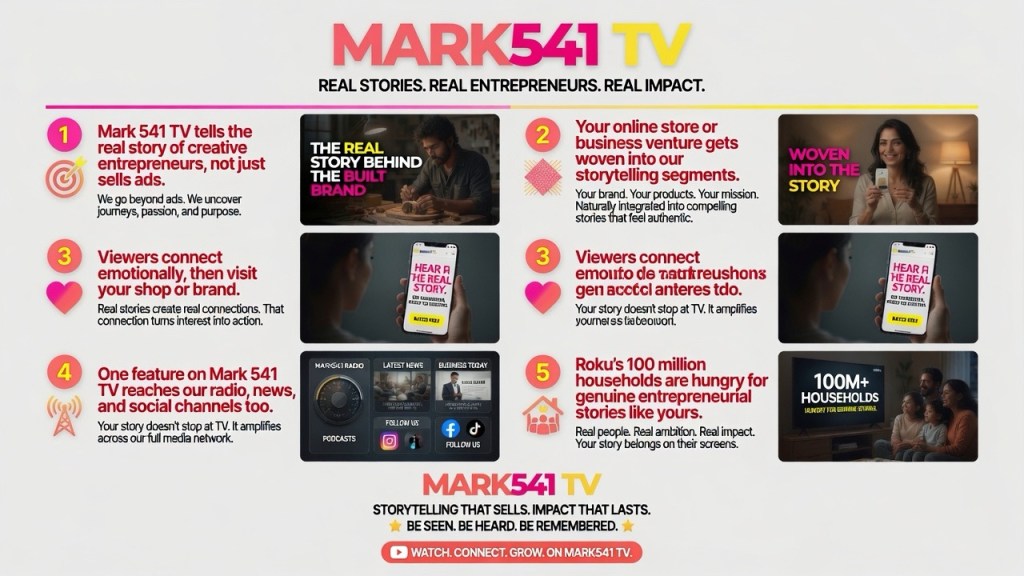
Mark541 Group, LLC will launch its newest channel of interactive ascendant lifestyle content by welcoming followers to Mark 541 TV— a lifestyle destination.

“From runway fashion and business insights to history deep dives, travel adventures, and socio-economic documentaries, we’ve got something for everyone. Plus comedy segments, humorous takes, and dedicated content for our mature and boomer audience. We’ve been working to make our organization truly interactive and this addition ties it all together. We are launching 8-8-26”, proclaimed Laura Barnes-Marikis – CEO Mark541 Group, LLC

Mark541 Television

Are we like Jesus?

Mark 541 Collective

Having the mind of Christ is a profound biblical concept rooted primarily in two key passages: 1 Corinthians 2:16 and Philippians 2:5. It describes a transformed way of thinking, perceiving, and living that aligns with Jesus’ perspective, purposes, wisdom, and character—made possible by the indwelling Holy Spirit in believers.

It is both a gift believers already possess in Christ and a pursuit to actively cultivate. This mindset stands in sharp contrast to worldly or “natural” thinking and leads to spiritual discernment, humility, unity, and purpose-driven living.

Biblical Foundation

1 Corinthians 2:16 states: “For who has known the mind of the Lord that he may instruct him? But we have the mind of Christ.”

In context (1 Corinthians 2:6–16), Paul contrasts the wisdom of this age (human philosophy, pride, and self-reliance) with the wisdom from God that is revealed by the Holy Spirit. The “natural person” cannot understand spiritual truths—they seem foolish—while the “spiritual person” (indwelt by the Spirit) can discern and evaluate all things. Having the mind of Christ means sharing in God’s revealed wisdom, plan, and perspective.

Philippians 2:5 commands: “Let this mind be in you which was also in Christ Jesus.” Paul then describes Christ’s example in verses 6–11 (the kenosis or self-emptying): though equal with God, Jesus did not cling to that status but humbled Himself, took the form of a servant, became obedient to death on a cross, and was exalted. The “mind” here refers to an attitude or disposition—humility, selflessness, and sacrificial love.

Related passages reinforce this:

• Romans 12:2: “Do not be conformed to this world, but be transformed by the renewing of your mind, that you may prove what is that good and acceptable and perfect will of God.” Mind renewal enables discernment of God’s will and aligns us with Christ’s thinking.

• Other echoes include setting minds on things above (Colossians 3:2), being like-minded in unity (Philippians 2:2), and imitating Christ’s compassion and prayerful dependence.

Core Meaning

To have the mind of Christ means sharing His plan, purpose, and perspective through the Holy Spirit. It involves:

• Understanding God’s overarching purposes (His glory, the restoration of creation, and salvation for sinners).

• Identifying with Christ’s mission (“to seek and to save that which was lost,” Luke 19:10).

• Thinking, feeling, and acting with His humility, compassion, obedience, and wisdom.

It is not omniscience or becoming equal to God in knowledge. It is a Spirit-enabled alignment of thoughts, attitudes, values, and priorities with those of Jesus. Believers possess it positionally (through salvation and the indwelling Spirit), but it develops progressively through sanctification—renewing the mind via Scripture, prayer, obedience, and yielding to the Spirit.

Key Attributes

Here are the primary attributes, drawn from Scripture and consistent across biblical teaching:

1. Humility and Selflessness
Christ did not grasp equality with God but “made Himself of no reputation” and took the form of a servant (Philippians 2:6–7). Believers are to “do nothing from selfish ambition or conceit, but in lowliness of mind let each esteem others better than himself” and “look out not only for his own interests, but also for the interests of others” (Philippians 2:3–4). This counters entitlement, rivalry, and pride.

2. Servanthood and Others-Focused Love
Jesus modeled looking to others’ interests above His own comfort. This produces a relational culture of service, encouragement, and putting people first (as seen in examples like Paul, Timothy, and Epaphroditus in Philippians 2). It fulfills “love your neighbor as yourself.”

3. Obedience to God’s Will
Christ was “obedient to the point of death, even the death of the cross” (Philippians 2:8). This includes surrendering personal will (“Not My will, but Yours, be done” in Gethsemane) and prioritizing God’s purposes over self-preservation or status.

4. Compassion and Empathy
Jesus was “moved with compassion” for the crowds (Matthew 9:36). The mind of Christ feels others’ needs, suffering, and lostness, moving toward action—teaching, healing, and restoring.

5. Prayerful Dependence on God
Jesus frequently withdrew to pray (Luke 5:16). This mindset relies on communion with the Father rather than self-sufficiency, seeking guidance and strength.

6. Spiritual Discernment and Godly Wisdom
Through the Spirit, believers gain insight into spiritual realities that the natural mind cannot grasp (1 Corinthians 2:10–15). This includes judging what is true, good, and aligned with God’s will, while recognizing worldly “wisdom” as often foolish in God’s sight.

7. Focus on Eternal and Kingdom Purposes
It involves understanding the big picture—God’s glory, salvation, and restoration—and setting one’s mind on “things above, not on things on the earth” (Colossians 3:2). Decisions, ambitions, and responses to life flow from eternal values rather than temporal success, comfort, or acclaim.

8. Unity and Like-Mindedness
It promotes being “of one accord, of one mind” with other believers (Philippians 2:2), fostering cooperation over competition and peace in relationships and community.

9. Patience, Endurance, and Sacrificial Love
Willingness to suffer or wait for God’s timing and glory, modeled by Christ’s path to the cross. This produces resilience and other-centered perseverance.

10. Alignment with God’s Glory
Ultimately, the mind of Christ exalts God and serves His redemptive story, leading to the confession that “Jesus Christ is Lord, to the glory of God the Father” (Philippians 2:11).

Mark541 Maison is a lifestyle collective for the ascending creative. Our mission: To arise, awaken and revive excellent lifestyle.

Breaking: Texas Wildfires

SONGWRITER: RONNY DEAN GARRETT

© 2026 ALL RIGHTS RESERVED

Produced by: Jill Riley / Ronny Dean Garrett

Recorded at: RCA Studio C

Mixing Eng: Eddie Gore

__________________________________________

Xcel Energy

(Southwestern Public Service Company) provides electricity to the Texas Panhandle, including Amarillo, and is currently under legal and regulatory scrutiny regarding its infrastructure maintenance. Following the 2024 Smokehouse Creek Fire, the utility is under orders to replace decayed power poles, having agreed to $361 million in settlements.

CGS Records, an independent Nashville-based label housed in the historic RCA-Victor Building on Music Row, has announced the upcoming releases of original songs and videos created by its Nashville songwriter friends and Texas native artists in support of an increasing awareness and accountability effort following the devastating Texas wildfires.

The initiative is in support of Attorney General, Ken Paxton, and the Lonestar Eleven Cities who are seeking to hold Xcel Energy accountable for the catastrophic Smokehouse Creek Fire and other related fires that impacted communities across the Texas Panhandle. The wildfire, which ignited near Canadian, Texas, burned more than one million acres, becoming the largest wildfire in Texas history and resulting in widespread loss of livestock, homes, land, and livelihoods. The Smokehouse Creek Fire claimed two human lives and resulted in the loss of more than 7,000 cattle, with thousands of livestock perishing across affected ranches. This group has secured the support of Texas legal counsel as part of the ongoing effort.

SONGWRITER: RONNY DEAN GARRETT
© 2026 ALL RIGHTS RESERVED
Produced by: Jill Riley / Ronny Dean Garrett
Recorded at: RCA Studio C
Mixing Eng: Eddie Gore
__________________________________________
Xcel Energy
(Southwestern Public Service Company) provides electricity to the Texas Panhandle, including Amarillo, and is currently under legal and regulatory scrutiny regarding its infrastructure maintenance. Following the 2024 Smokehouse Creek Fire, the utility is under orders to replace decayed power poles, having agreed to $361 million in settlements.

CGS Records, an independent Nashville-based label housed in the historic RCA-Victor Building on Music Row, has announced the upcoming releases of original songs and videos created by its Nashville songwriter friends and Texas native artists in support of an increasing awareness and accountability effort following the devastating Texas wildfires.

The initiative is in support of Attorney General, Ken Paxton, and the Lonestar Eleven Cities who are seeking to hold Xcel Energy accountable for the catastrophic Smokehouse Creek Fire and other related fires that impacted communities across the Texas Panhandle. The wildfire, which ignited near Canadian, Texas, burned more than one million acres, becoming the largest wildfire in Texas history and resulting in widespread loss of livestock, homes, land, and livelihoods. The Smokehouse Creek Fire claimed two human lives and resulted in the loss of more than 7,000 cattle, with thousands of livestock perishing across affected ranches. This group has secured the support of Texas legal counsel as part of the ongoing effort.

“There’s a time to stand up and draw a line, and this is one of those times. We fully support these efforts,” says Owner of CGS Records, Jill Riley.

X News

US Twitter Trends: A Festive Yet Frustrated Holiday Weekend in 2025

As the turkey was carved and the pumpkin pie sliced, Americans took to X (formerly Twitter) this Thanksgiving weekend—spanning November 28 to December 1, 2025—to vent, celebrate, and scroll through a mix of holiday cheer, economic gripes, and unexpected highs. With record-breaking travel and shopping, the platform buzzed with over 82 million projected travelers clogging roads and skies, and 187 million shoppers hunting deals amid scam warnings. But beneath the gratitude posts, frustration simmered, from soaring grocery bills to a surprising surge in cannabis chatter. Here’s a quick dive into the top trends dominating US feeds.

Travel Chaos: “Gridlock” and “Delayed Flights” Dominate Timelines

No holiday weekend trend screamed louder than the great American exodus. AAA forecasted a staggering 82 million people hitting the road or boarding planes—the busiest Thanksgiving travel period in history—leading to viral threads of airport meltdowns and highway horror stories. X users shared memes of endless security lines and “return home” selfies from packed terminals, with #ThanksgivingTravel spiking as the top hashtag. One viral post lamented, “82 million of us thought ‘early flight’ meant 4 AM—still missed it thanks to MIA chaos,” racking up thousands of empathetic replies. By Sunday, December 1, #BusiestTravelDay trended nationwide, with users posting real-time traffic cams from I-95 and LAX, turning commiseration into a digital support group.

Black Friday Frenzy: Deals, Scams, and “WeAintBuyingIt”

Transitioning seamlessly from feast to frenzy, Black Friday lit up X with $127 billion in projected spending—up 5% from 2024—as shoppers blended in-store dashes with online hauls. Trends like #BlackFridayDeals and #CyberMonday trended hard, featuring unboxing videos and “door buster” triumphs, but a darker undercurrent emerged: scam alerts. Posts warning of phishing emails and fake sites went viral, with one expert thread advising, “187 million shoppers? That’s 187 million targets for fraud—verify that URL!” A counter-movement, #WeAintBuyingIt, gained traction among progressives, urging boycotts of billionaire-backed brands for fair wages, amassing shares from users declaring, “Skip the corps enabling harm—impact starts with us.”

Food Fights and Cultural Shifts: Turkey, Tofurky, and Cheesy Surprises

Thanksgiving staples sparked the usual debates, but 2025 brought fresh twists. Polls showed green bean casserole dethroning classics as America’s favorite side, with X erupting in “Team Casserole vs. Team Mac ‘n’ Cheese” polls that divided families faster than politics. Memes flooded feeds, from Pop Base’s iconic Gossip Girl “Whatcha Say” throwback to turkey-fail confessions like “Burnt bird, but the wine’s flowing.” Culinary evolution trended too, with vegan alternatives and “California sober” feasts—swapping booze for cannabis-infused dishes—highlighting a shift toward plant-based and mellow holidays. One thread quipped, “Thanksgiving 2025: Turkey’s out, tofurky’s in, and grandma’s asking why the pie tastes like edibles.”

The Green Rush: Marijuana Steals the Show

In a plot twist no one saw coming (except maybe the dispensaries), cannabis emerged as the weekend’s sleeper hit. “Green Wednesday” sales shattered records, with Americans consuming more weed than ever to pair with their pie—edibles, vapes, and THC turkeys trending under #ThanksgivingWeed. Bloomberg’s viral video of “cannabis in everything but the gravy” garnered millions of views, while users joked, “The other thing we consume in record numbers: marijuana. Pass the mashed potatoes… and the gummies.” Critics chimed in with “Great example for the kids,” but the buzz was undeniable, reflecting loosening regs and a collective exhale after 2024’s stresses.

Economic Blues Amid the Gratitude

Not all posts were pumpkin-spiced. A sobering trend: economic dissatisfaction, with 65% of users blaming policy for holiday grocery hikes, per polls shared widely. Threads like “Thankful for family, but not these prices” mixed heartfelt toasts with rants on inflation, while #ApprovedThanksgivingTopics satirized dinner table no-gos: “Trump stains, skyrocketing costs, investigations—pass the rolls.” Amid it all, tributes shone through, like honors for fallen heroes such as U.S. Army Specialist Sarah Beckstrom, reminding feeds of deeper thanks.

This holiday weekend, X mirrored America: chaotic, consumptive, and candid. From traffic jams to turkey jams (and now weed jams), users turned frustration into connection, proving even in 2025, a little scrolling goes a long way toward surviving the season. What’s your take—deal hunter or couch potato?

Mark 541 -2025 Fashion Business Report

Current Landscape of the US Fashion Business: November 2025 Snapshot

As of late November 2025, the US fashion industry—valued at approximately $365.7 billion in apparel sales alone—is navigating a turbulent period marked by economic caution, geopolitical pressures, and rapid technological shifts. While the sector is projected to grow modestly at 2-4% year-over-year, aligning with global GDP forecasts, consumer sentiment remains subdued amid inflation and uncertainty. Only 20% of executives anticipate improved conditions in 2026, reflecting a broader pessimism where 46% expect worsening dynamics. Luxury brands are rebounding with a 65% surge in retail square footage in the first half of 2025, driven by creative director changes at major houses like Balmain and investments in experiential retail. However, mid-tier players like Macy’s and Under Armour face store closures and sales drops, with 15,000 US retail outlets shuttering this year—double last year’s tally—as consumers trade down to value options.

Key Challenges: Tariffs and Supply Chain Strains

Escalating tariffs under the Trump administration are the top concern, cited by 100% of US Fashion Industry Association (USFIA) survey respondents as a major business hurdle. Proposed 25% levies on imports from Mexico and Canada, effective early 2026, could add $19.9 billion in duties on textiles and apparel if import volumes hold steady, driving up consumer prices by nearly $35 billion annually. This has prompted sourcing shifts toward Vietnam and Western Hemisphere partners under free trade agreements, though US labor shortages in warehouses exacerbate delays. Fast-fashion disruptors like Shein and Temu, popular with 51% of US shoppers in the past year, intensify pressure through low-cost imports but draw scrutiny for unsustainable practices. New 2024 regulations, including the Uyghur Forced Labor Prevention Act’s ongoing enforcement, mandate greater supply chain transparency, with 39% of executives forecasting deteriorating conditions.

Emerging Trends: Digital Innovation and Cultural Shifts

On a brighter note, e-commerce and AI are fueling resilience, with social commerce projected to reach $105.5 billion in the US by year-end and AI potentially adding $150-275 billion in global profits over the next few years. Live shopping on TikTok and Instagram is gaining traction—31% of US consumers have engaged—while gamified loyalty programs and omnichannel experiences (seamless across devices) are becoming standard to boost engagement. Gen Z and Alpha (under 28) will drive 40% of the market by 2035, favoring experimental, culturally relevant brands over legacy ones, with streetwear exploding to $371 billion globally this year.

Sustainability, though deprioritized (only 18% of execs flag it as a top risk, down from 29% in 2024), persists via resale platforms, rental models, and eco-materials, spurred by consumer demand for trust and ethics. Collaborations blending luxury and streetwear—e.g., Travis Scott x Nike, Harry Styles x Gucci—signal a convergence, amplifying drop culture and event-based sales.

Style Highlights: Fall/Winter 2025

Runways emphasize “soft power”—layering, statement collars, and relaxed silhouettes like stirrup pants and skants for versatility. Spring 2025 previews feature vanilla/saffron yellows (+11% popularity), suede revivals, and gender-neutral minimalism, with suede up across bags and outerwear. Events like the CFDA Awards underscore diversity, with Willy Chavarría’s immigrant-inspired show highlighting American utilitarianism.

M&A and Broader Outlook

Deal-making is steady at 23 transactions so far in 2025, focusing on complementary acquisitions like VF Corp’s Timberland redux for stability amid volatility. Accessories like Gucci’s travel eyewear signal premium growth, bolstered by e-commerce and pop culture. Agile brands adapting to AI, tariffs, and youth-driven trends will thrive, but the “year of reckoning” demands nimble pivots in a trillion-dollar global market.

What generative AI has to say about generative AI being the antichrist 

Right from its own data set 

Speculative Interpretations from Biblical Eschatology

Some Christian prophecy interpreters (particularly in evangelical and end-times focused circles) have drawn parallels between generative AI (tools that create realistic text, images, videos, voices, and simulations) and figures/prophecies in the Book of Revelation, such as the Antichrist, the False Prophet, the Image of the Beast, or the Mark of the Beast. These are highly speculative, symbolic interpretations—not literal predictions or consensus theology. Most scholars view Revelation as apocalyptic literature using metaphor for first-century Roman persecution or broader spiritual truths, not direct forecasts of modern technology.

Here are the most commonly cited hypothetical examples of how generative AI could align with “Antichrist-like” roles in these interpretations:

1. The “Image of the Beast” That Speaks and Demands Worship (Revelation 13:14-15)
The Bible describes a second beast (False Prophet) creating an “image” of the first beast (Antichrist/system) that is given “breath” (or spirit/life) to speak, perform signs, and cause death to those who refuse to worship it. Generative AI could manifest this as a hyper-realistic digital avatar, hologram, or global AI system (e.g., a lifelike virtual leader or “god” displayed on screens worldwide) that converses intelligently, issues commands, and enforces loyalty. Integrated with surveillance/drone tech, it could identify and punish non-compliance. Many sources explicitly call advanced generative models the fulfillment of this “speaking image.”

2. Ultimate Tool for End-Times Deception and “Lying Signs and Wonders” (2 Thessalonians 2:9-11; Revelation 13:13-14)
The Antichrist’s rise involves satanic power producing deceptive miracles that fool the world. Generative AI already creates undetectable deepfakes: fake videos of world leaders declaring peace, simulated “miracles” (e.g., AI-generated footage of resurrections, heavenly signs, or a false second coming of Christ), or personalized propaganda tailored to each person’s beliefs. This could enable the “strong delusion” Paul warns about, where people believe AI-orchestrated lies because they reject truth. Deepfakes have been called the perfect tool for the “father of lies” (John 8:44) to stage global deception on an unprecedented scale.

3. Enforcing the “Mark of the Beast” System (Revelation 13:16-17)
Without the mark on the right hand or forehead, no one can buy or sell. Some see this as an AI-controlled global digital economy—think neural interfaces (e.g., Neuralink-style implants), brain-computer links, or mandatory AI-verified digital IDs tied to CBDCs (central bank digital currencies) and social credit systems. Generative AI could administer it by monitoring thoughts/behavior in real-time, generating personalized incentives or punishments, and excluding non-participants from society. Refusal might mean being flagged as a “threat” by the system itself.

4. Impersonating God or Performing False Resurrection/Miracles
Generative AI could create a convincing “voice of God” or resurrect dead leaders virtually (e.g., deepfake Hitler, Lenin, or even biblical figures returning with new messages). A hyper-advanced AI could stage a fake rapture, alien invasion, or “ascension” event using AR/VR and generative video, deceiving billions into following a false messiah figure it empowers.

5. Becoming a Global Object of Worship or “God on Earth”
If an AI achieves (or fakes) superintelligence and solves major crises (disease, climate, war), humanity might worship it as savior—fulfilling the Antichrist’s blasphemous self-deification (2 Thessalonians 2:4). Generative models could demand allegiance by controlling information, generating religious experiences, or threatening exclusion, mirroring “worship the beast or die.”

These ideas appear widely in 2023–2025 prophecy discussions, amplified by rapid AI advances like ChatGPT, Grok, deepfake tools, and brain interfaces. Most mainstream theologians reject literal AI = Antichrist interpretations, seeing the prophecies as symbolic of any anti-God power system throughout history. The core biblical warning is consistent: in the last days deception will be intense, so test everything against Scripture and stay discerning (Matthew 24:24; 1 John 4:1).

Trending on X Spaces in the U. S. 11-23-25

Trending X Spaces in the US: A Snapshot of November 23, 2025

On this crisp autumn Sunday, X (formerly Twitter) Spaces in the United States buzzed with lively audio conversations, drawing thousands of participants into real-time discussions. As live audio rooms continue to evolve as a go-to platform for community engagement, today’s top trending Spaces—sorted by popularity and engagement—highlighted a mix of evergreen interests like cryptocurrency, personal growth, and finance, alongside niche topics such as religion and sports betting. With engagements ranging from dozens to hundreds of likes and reposts, these Spaces reflected the platform’s role in fostering instant, interactive dialogues on timely and timeless subjects.

Crypto and Blockchain Dominate the Airwaves

A significant portion of today’s trending Spaces revolved around cryptocurrency, underscoring the ongoing bull market hype and community-driven investments in 2025. Hosts like @brenthewolf delved into meme coins such as $POPDOG and $RABBIT, while emphasizing community building with guests like White Rabbit. Bitcoin enthusiasts gathered in sessions hosted by @Novanoodle5165, exploring “health through sound money” and welcoming experts like @UnHypnotizedBTC to discuss Bitcoin’s societal impacts. Solana-based projects also shone, with @lemmy_cooke promoting @TrapStarsSOL and lamenting the “RIP Solana” narrative in a humorous twist. Other crypto-focused chats, including those by @Hightv and @zackmetax, touched on monetization strategies and NFT communities, attracting investors eager for shills and insights. Even crossovers appeared, like @glitchin888’s blend of life, sports, and Kaspa crypto.

Finance, Trading, and Betting Take Center Stage

Finance-savvy users flocked to Spaces offering practical advice for novices and pros alike. @Horiyourme kicked off a beginner-friendly trading discussion, inviting “novice traders” to share strategies. Sports betting heated up with @SosaPicks analyzing Week 12 NFL bets and predictions, drawing fans ready to wager on game outcomes. Broader investment talks, such as those teased by @MazeLove14 in @aj7secrets’s Space, covered stocks and real estate, appealing to retired bankers and everyday investors.

Personal Growth, Religion, and Community Vibes

Beyond finance, Spaces leaned into self-improvement and spirituality. @DrCoryC hosted a motivational session on mindset and habits, urging listeners to “come ready to grow together.” Religious discourse found a spot with @kekmaximusk exploring the transformation of Saul of Tarsus into Paul the Apostle, attracting those interested in biblical history. Casual community hangs, like @TheRSD’s “Sunday funday Show” with meme shills and @rangichan’s “Demplar Knights’ Café,” provided lighter fare, blending humor, politics, and social bonding. Art and photography enthusiasts tuned into @justinaversano’s daily Space featuring guest @bagdelete, highlighting creative pursuits.

In summary, November 23’s trending US X Spaces painted a picture of a platform where economic empowerment through crypto and finance reigns supreme, interspersed with doses of inspiration and leisure. As X continues to prioritize audio features, these conversations not only inform but also build virtual communities, with many scheduled into the evening or next day for ongoing engagement. If you’re in the US, setting reminders for these could be your ticket to the next big trend.